O Jouvoli adiciona uma camada de controlo de supervisão e orquestração à sua infraestrutura de automação existente — Siemens S7, Rockwell, Beckhoff ou qualquer outro PLC que já utilize. Sem necessidade de substituir o equipamento. Visibilidade em tempo real e controlo automatizado dos dispositivos desde o primeiro dia.
Uma camada de supervisão, não um substituto do PLC.
A maioria dos problemas de controlo industrial não requer hardware novo. O que é necessário é uma camada de orquestração mais inteligente: uma que leia os dados dos seus PLCs, encaminhe as decisões através de uma lógica configurável e envie comandos de volta — tudo isto com a intervenção humana no processo.
O módulo SCADA e Controlo da Jouvoli situa-se no nível de supervisão da pirâmide de automação. Os seus PLC continuam a fazer o que sempre fizeram.
Jouvoli acrescenta:
Visualização centralizada em tempo real em todos os dispositivos e locais
Lógica de automação configurável através do ambiente de execução de lógica programável integrado
Controlo bidirecional — leitura de dados do sensor, definição de pontos de referência e envio de comandos
Registo completo de todas as ações automatizadas e manuais
Capacidade
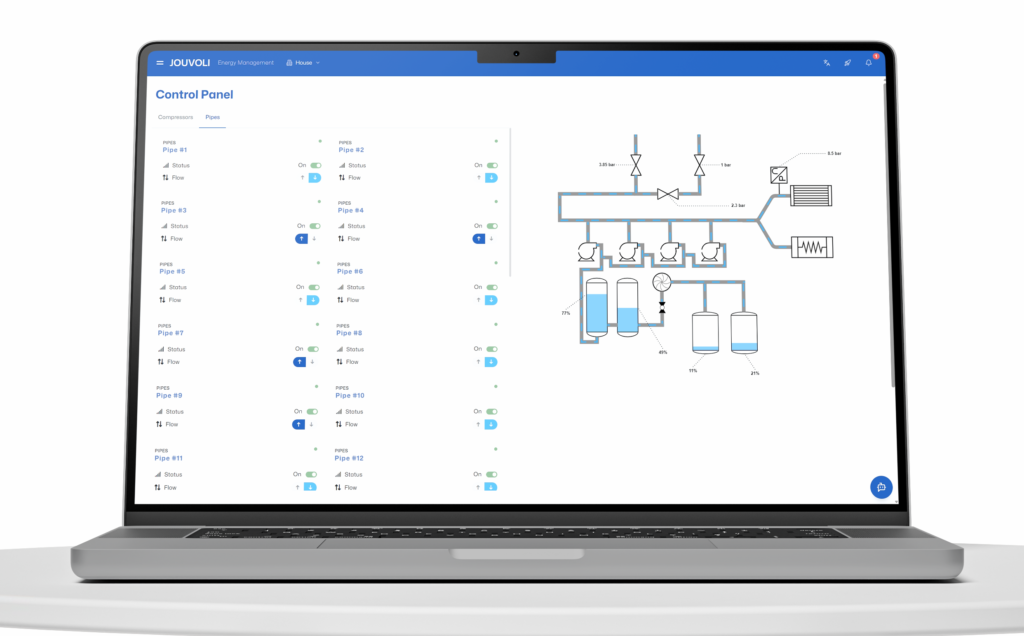
Visualização SCADA em tempo real
Painéis em tempo real para todos os dispositivos e todas as instalações. Visualizações de processos configuráveis, gestão de alarmes e análise de tendências. Compatível com todos os fabricantes — um único painel de controlo, em vez de um por fornecedor.
Orientação automatizada de dispositivos
Defina regras e horários que ajustem automaticamente o comportamento dos dispositivos com base nas leituras dos sensores, nos preços da energia ou nas metas de produção. Exemplo: reduzir automaticamente a potência das estações não essenciais quando a procura diminuir.
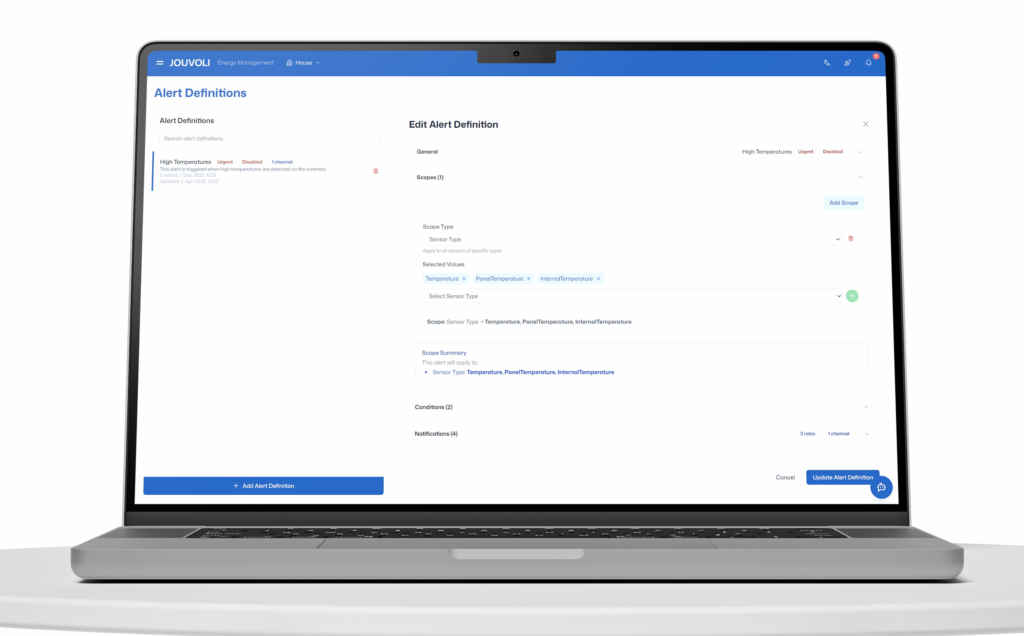
Alertas programáveis
Alertas multicanal (e-mail, SMS, webhook) acionados por condições de processo, falhas de dispositivos ou violações de limites. Cadeias de escalonamento e fluxos de trabalho de confirmação configuráveis.
Runtime de lógica de software integrado
Um ambiente de execução lógica funciona diretamente no nó periférico. Defina sequências, interbloqueios e fluxos de controlo condicionais sem código personalizado. Executa-se localmente — o controlo continua mesmo que a ligação à nuvem falhe.
Painel do operador com comando manual
Qualquer ação automatizada pode ser suspensa ou anulada por um operador. Os controlos de acesso baseados em funções determinam quem pode anular o quê. Todas as anulações são registadas com a data e hora e a identidade do utilizador.
Suporte a protocolos
Protocolo
Utilização típica
OPC UA
Siemens, Beckhoff e a maioria dos PLCs modernos. O padrão universal para a interoperabilidade industrial.
S7comm
Compatível com Siemens S7-300 / S7-400 / S7-1200 / S7-1500. Ligação direta sem servidor OPC UA.
MQTT
Dispositivos de ponta, sensores IoT e hardware personalizado. Sistema pub/sub leve para dados de alta frequência.
Modbus TCP / RTU
Contadores de energia, variadores de frequência e equipamentos antigos. O cavalo de batalha da indústria.
EtherNet/IP
PLCs, variadores e módulos de E/S Rockwell / Allen-Bradley. Suporte completo para leitura e gravação.
PROFINET
A Siemens e outros dispositivos compatíveis com PROFINET. Ethernet em tempo real para automação de processos.
Adaptadores de protocolo personalizados disponíveis como complemento para equipamentos proprietários ou de nicho.
Concebido para incluir a intervenção humana
Concebido para incluir a intervenção humana
O Jouvoli não é um sistema de controlo autónomo. Cada sequência automatizada tem:
Visibilidade do operador: O que é que o sistema está a fazer e porquê?
Comando manual: Qualquer operador com a função adequada pode pausar ou redirecionar.
Registo de auditoria: Todas as ações automatizadas, substituições e alterações de configuração são registadas com data e hora e a identidade do utilizador.
Limite de segurança: O Jouvoli funciona em conjunto com os seus bloqueios de hardware, paragens de emergência e PLCs de segurança — não os substitui. Os sistemas de segurança têm sempre prioridade.
Estudo de caso: Da simulação de planeamento ao controlo da produção em tempo real
A situação
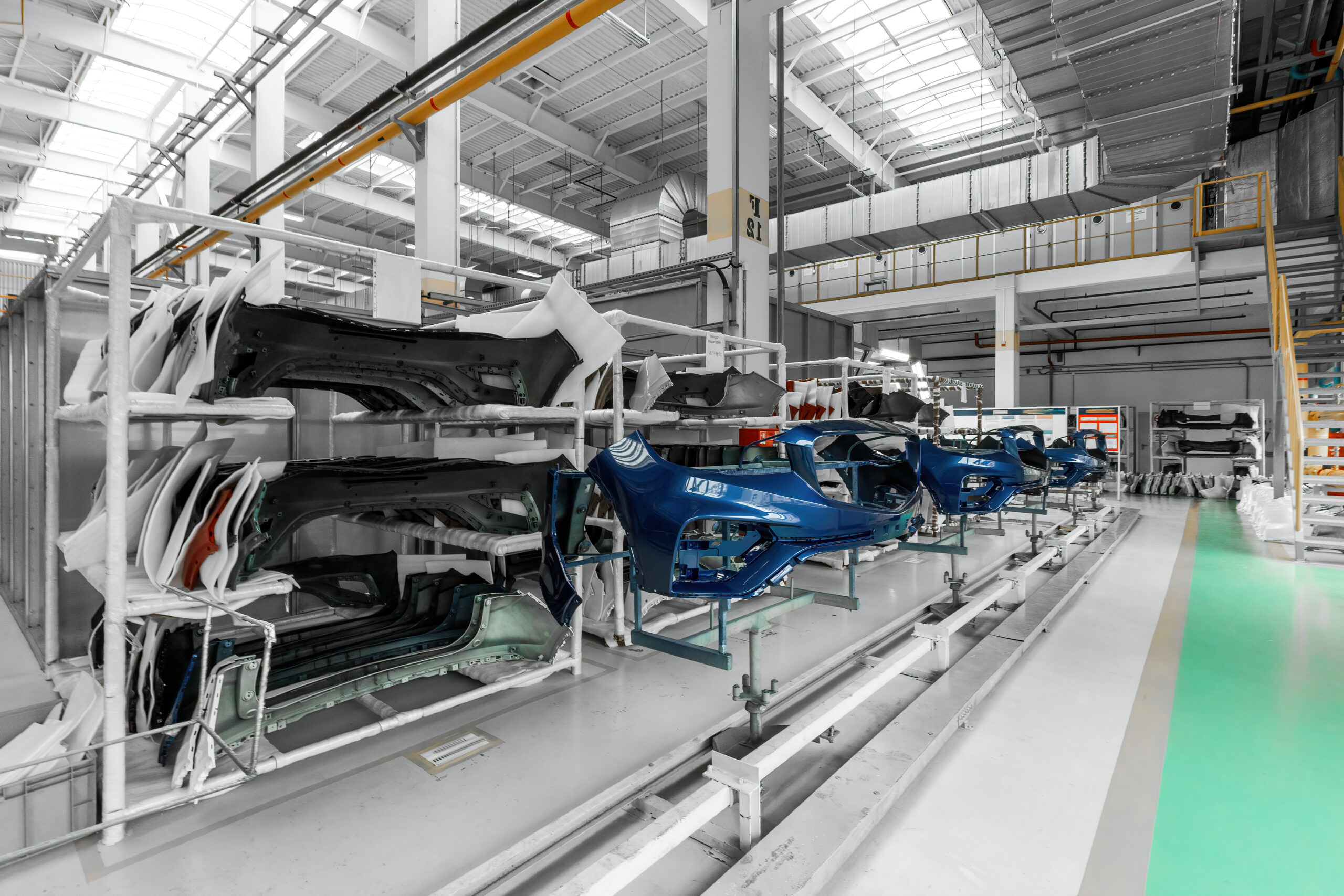
Um fornecedor automóvel europeu de nível 1 fabrica componentes da carroçaria — portas, tejadilhos, capôs, portas traseiras e pára-lamas —, abrangendo mais de 650 tipos de componentes. O fluxo de materiais da empresa tinha sido cuidadosamente concebido no Siemens Plant Simulation, uma ferramenta de simulação de eventos discretos utilizada para o planeamento e o layout.
A simulação era precisa. Mas não tinha qualquer ligação com o chão de fábrica real. O acompanhamento dos componentes era feito em papel. As decisões relativas aos percursos eram tomadas manualmente. Não havia uma visão centralizada da localização das peças, das estações bloqueadas ou do percurso específico que um componente deveria seguir.
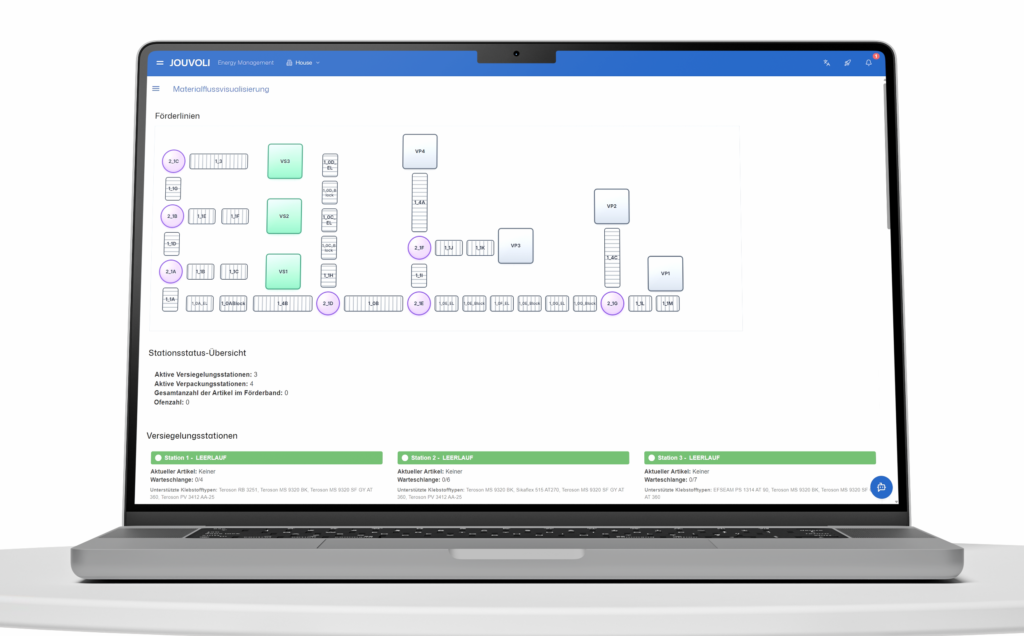
A Jouvoli utilizou o projeto do Plant Simulation como modelo e implementou-o como um sistema SCADA operacional, controlando o chão de fábrica real através do plano de controlo MQTT.
Acompanhamento de componentes: Os chips RFID instalados em cada componente enviam dados de localização em tempo real para o Jouvoli. Mais de 650 tipos de componentes, cada um com as suas próprias especificações de processo.
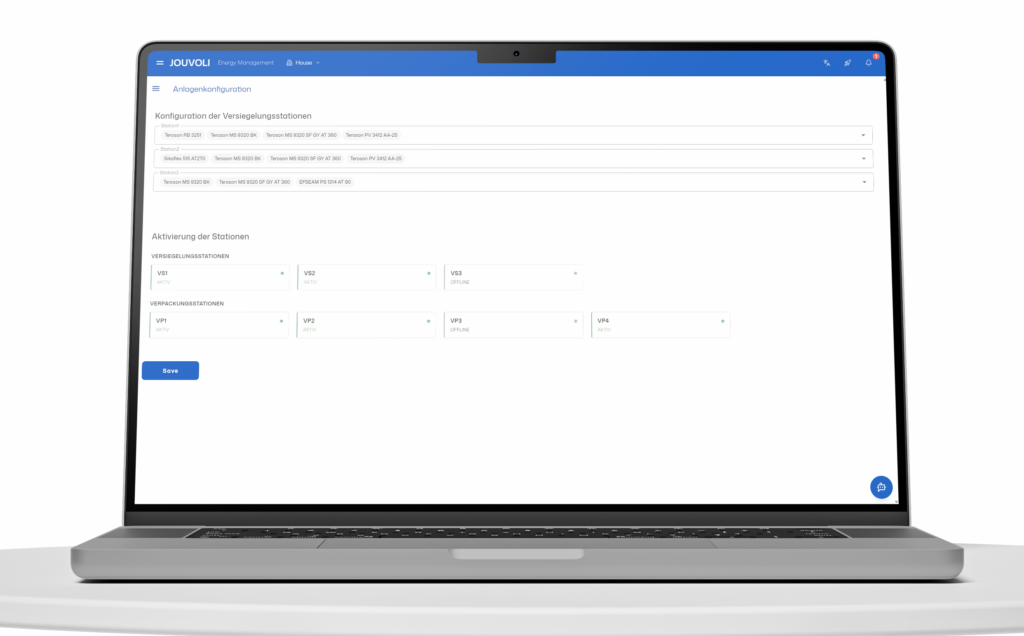
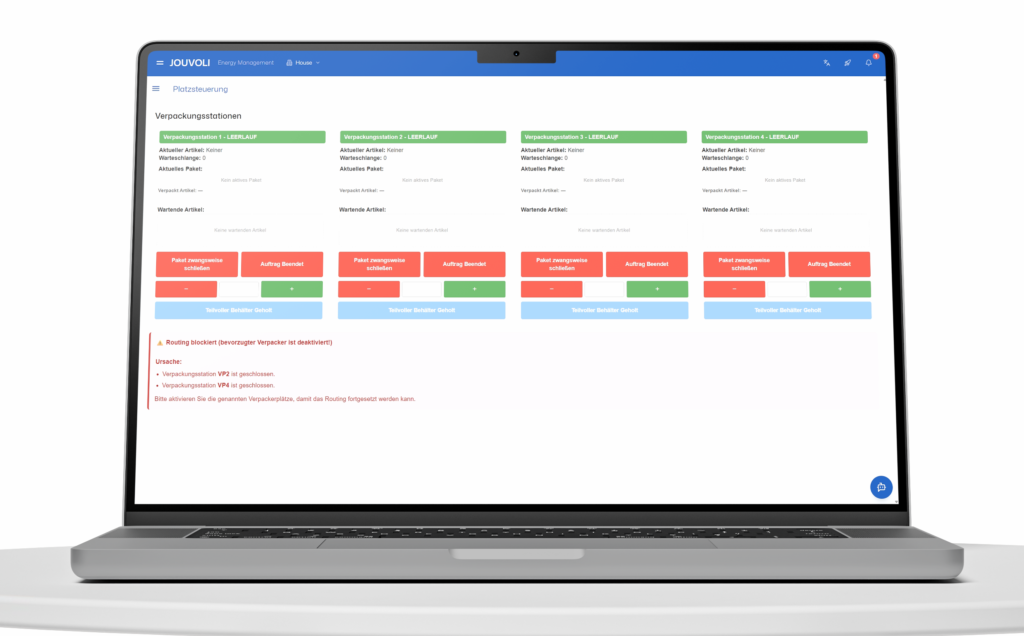
Roteamento de variantes: Quatro linhas de produção — que abrangem diferentes sequências de vedação, endurecimento e embalagem — são automatizadas consoante o tipo de componente. O Jouvoli lê o identificador RFID, determina a variante e encaminha o componente para a sequência de estações correta.
Controlo de processos: Tanto os processos automatizados (secagem em forno com perfis fixos de temperatura/tempo) como os processos manuais (secagem ao ar com confirmação do operador) são geridos no âmbito do mesmo fluxo de controlo.
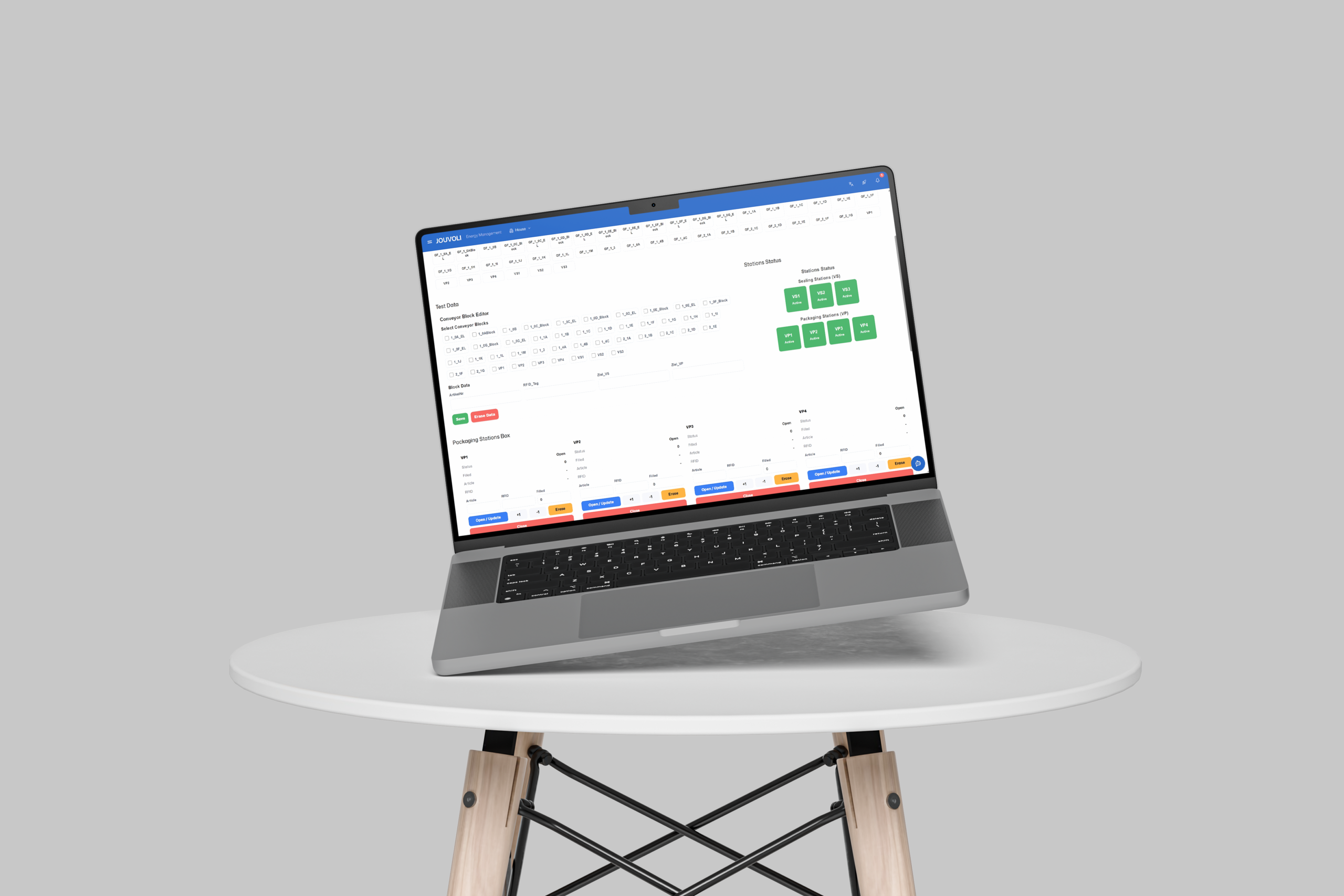
Painel do operador: Visualização em tempo real de todos os componentes ativos, do estado das estações e da profundidade das filas. Os operadores podem anular manualmente as decisões de encaminhamento para qualquer componente. Todas as anulações são registadas.
Mais de 650 tipos de componentes
rastreado em tempo real através de RFID — sem papelada, sem leitura manual
4 específicas da variante
ciclos de produção automatizados de ponta a ponta
Da simulação de planeamento à produção ao vivo
controlo da produção em semanas, utilizando o projeto de simulação existente como modelo
Painel do operador
com a possibilidade de intervenção manual mantida em todo o processo — sem automação do tipo «caixa preta»
Integração com o resto do Jouvoli
O SCADA & Control é um módulo de uma plataforma unificada. Sem custos adicionais de integração.
Combine com:
Monitorização e análise
análise de tendências a longo prazo em conjunto com o controlo em tempo real
ISO 50001 - Sistema de Gestão de Energia
utilizar dados SCADA para alimentar linhas de base energéticas automatizadas e a identificação de SEU
Motor de ML/IA
que as previsões de produção orientem as decisões de programação automatizada
Pronto para adicionar uma camada de controlo à sua automação atual?
Comece com um projeto-piloto de 6 semanas. Preço fixo. Ligamo-nos aos seus PLCs existentes — mantém tudo o que já funciona.